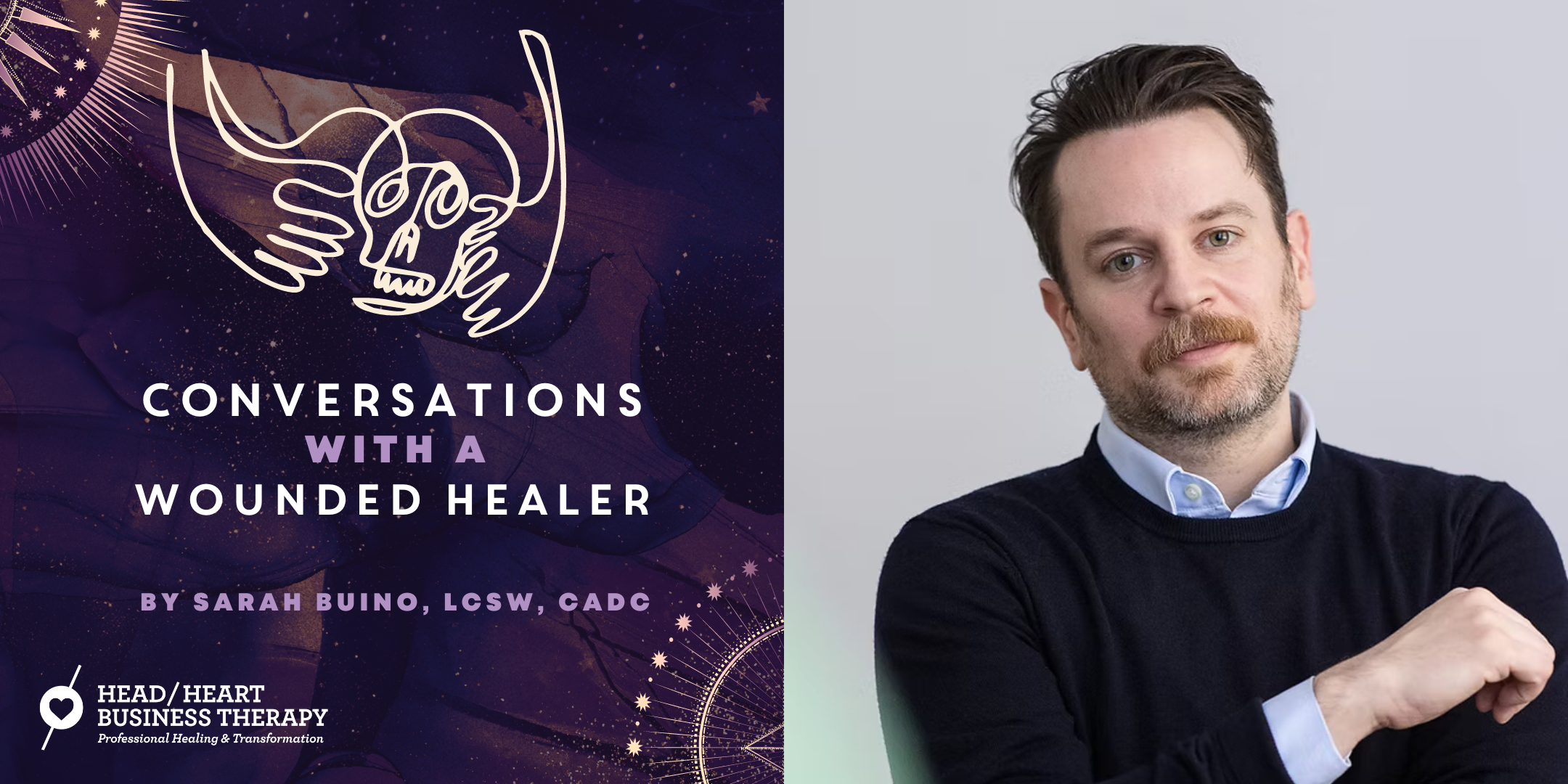
“I think that there's a way of practicing psychotherapy without losing your humanity.” ~Jordan Conrad
Can therapists ethically work with clients whose values oppose their own? Sarah Buino and Jordan Conrad explore professionalism, self-disclosure, political identity, and the future of psychotherapy in an increasingly polarized world.
Is therapy political? That's a good question and one that provokes an array of answers (just peruse any therapists' Facebook group). I've talked with a decent number of therapists who possess vastly different political views than their clients. Every one of these compassionate providers mentions how difficult it is to hold space for healing amid political discord.
Enter Jordan Conrad, PhD, LCSW, a psychotherapist, researcher, and the founder and clinical director of Lexington Park Psychotherapy in NYC. Jordan is an accomplished clinician and author, and his work explores difficult topics in the philosophy of medicine, neurodiversity, and psychotherapy. He's also an excellent sparring partner on the subject of ethics in therapeutic spaces.
Let's get ready to (verbally) rumble!
Why "therapy is political" means different things to different clinicians
How therapists can distinguish personal values from professional responsibilities
The ethical complexities of treating clients with opposing worldviews
Why nuance, discernment, and self-reflection matter more than certainty
How the therapy profession can evolve without losing its humanity
"It's an honor to be a part of social work. It's a storied profession, and one of the great benefits is also one of its biggest curses. When acting as a professional, when that switch is on, I don't always get to make choices that align with my personal views," says Jordan, whose philosophical background informs his views about therapy. "You have to put your own values to the side," he explains, "because you've adopted these much bigger values."
If the current political climate tests your ability to put logic and reason above your emotions or affiliations, then, same.
"When people talk about therapy being political and reject working with, say, police officers, sometimes it's a badge of honor, like, I'm part of the good fight!" Jordan observes. “I cannot emphasize enough how understandable a position that is. It's coming from such a deep, important, and pained place. But I don't think it's a part of the therapy."
If we want therapy to evolve, therapists should have a shared understanding of what therapy is. Unfortunately, our marginalized clients, coworkers, and community members don't have the luxury of time or capacity for nuanced debate.
Perhaps the work of sitting with a homophobe or racist belongs to those of us with the privilege to safely do so. "I think there's a responsibility to be seeing these people," says Jordan. "They're being hurt as well."
Whew! No one ever said liberation would be easy.
GUEST CONTACT & BIO
Jordan Conrad, PhD, LCSW, is a psychotherapist, researcher, and the founder and clinical director of Lexington Park Psychotherapy in New York City. As a clinician, Jordan is both an Academic Associate at the Washington Baltimore Center for Psychoanalysis and certified in Cognitive Behavioral Therapy (CBT). As a researcher, Jordan’s work has appeared in Oxford Handbooks, the American Journal of Psychotherapy, the Journal of Medical Ethics, and several other leading journals in the field. His work explores difficult topics in the philosophy of medicine, neurodiversity, and psychotherapy.
MENTIONED IN THIS EPISODE
Psychotherapy, Politics, and the Limits of Professionalism
When Politics Enters The Therapeutic Relationship: Ethical & Clinical Guidance
Center For BioEthics And Medical Humanities
Psychotherapy Networker Symposium
Sarah McCaslin, MS, MDiv, LCSW
Spirituality In Therapy: Helping Clients Navigate Faith, Identity, And Meaning
Being White Today: A Roadmap For A Positive Antiracist Life
RECOMMENDED EPISODE
Join the waitlist for the next Authentic Leaders Group!
This is a journey of self-discovery and leadership mastery, where you'll not only enhance your leadership skills but also forge meaningful connections with fellow therapists who are committed to their own growth and the betterment of the therapy field. Apply now!
Thank you to The Therapist Network for sponsoring the show!
The Therapist Network is a global community built by and for therapists. You’ll find live consult groups, an ever-growing library of workshops and courses, plus a community that really sees you. Sarah’s group, Tending to the Wounded Healer, meets every other Monday from 1–2pm CT, and it’s a space to explore the intersection of your lived experience and your clinical work.
So if you want to feel more supported and less alone, visit TheTherapist.Network—or join Sarah’s group directly at tinyurl.com/HealerConsultTTN.
UPCOMING EVENTS
Check the calendar for opportunities to connect with Sarah and earn CEs.
SUPPORT THE SHOW
Conversations With a Wounded Healer Merch
Join our Patreon for gifts & perks
Shop our Bookshop.org store and support local booksellers
Share a rating & review on Apple Podcasts
***
Let’s be friends! You can find me in the following places…